Rain takes a pause: Dry winds to bring relief across Delhi-NCR, Punjab, Haryana –
**Introduction**
Delhi-NCR, the sprawling metropolitan heart of India, has witnessed one of its most unpredictable monsoon seasons in recent memory. From sudden cloudbursts that paralysed traffic on the NH-44 to unseasonal downpours that waterlogged colonies in Gurgaon and Noida, the rains have been as erratic as they have been intense. Just when residents were bracing for another week of umbrellas, waterlogged streets, and humidity-induced fatigue, a significant meteorological shift is underway. According to emerging weather patterns and early forecasts from the India Meteorological Department (IMD), the monsoon is taking a deliberate pause. Dry, parching winds sweeping in from the northwest are set to bring a much-needed respite across Delhi-NCR, Punjab, and Haryana. This transition isn’t just about carrying fewer raincoats; it carries implications for agriculture, public health, energy consumption, and the region’s overall climate rhythm. In this in-depth feature, we explore why the rains are easing, what the dry winds mean for the ground reality, and how citizens, farmers, and policymakers should prepare for the changing skies.
**The Meteorological Shift: Why Now?**
Every monsoon season in the Indo-Gangetic plains is governed by the interplay of the southwest monsoon currents, western disturbances, and local thermal lows. This year, the monsoon’s retreat has been unusually slow, with moisture-laden systems persisting well into September. However, recent satellite imagery and radar data indicate a strengthening of the anti-cyclonic circulation over Rajasthan and adjoining regions. This high-pressure system is acting as a barrier, steering the monsoon clouds away from the northwestern belt and replacing them with hot, dry winds locally known as “loo” in their early-season avatar.
The IMD’s latest synoptic analysis shows a marked decline in moisture inflow from the Bay of Bengal and the Arabian Sea over the past 72 hours. Instead, cold, dry air masses from the higher latitudes are being drawn southward, colliding with the residual moisture and causing the skies to clear. For Delhi-NCR, this means a transition from overcast, humid days to sunny, arid afternoons. In Punjab and Haryana, the effect is even more pronounced, as the agricultural heartlands prepare for the post-monsoon cropping cycle.
**Impact on Daily Life in Delhi-NCR**
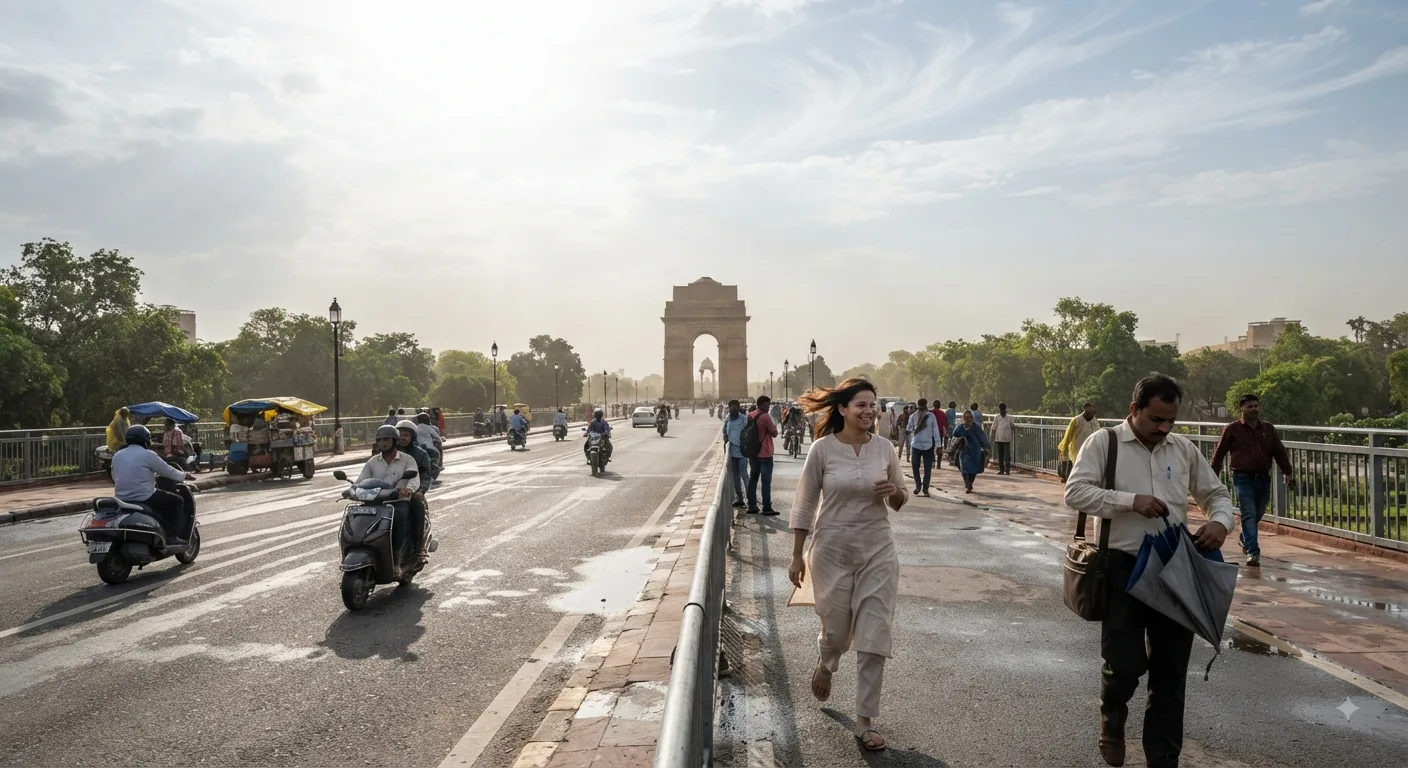
For the average Delhiite, the pause in rain brings a mixed bag of relief and adjustment. The immediate benefit is visible: streets that were recently slick with rainwater are drying up, potholes are more visible, and the dreaded “water-logging” alerts on social media are likely to diminish. Commuters can expect smoother traffic flow on key corridors like the Outer Ring Road, Mathura Road, and the DND Flyway, as water-related diversions and slow-moving traffic caused by waterlogging become less frequent.
However, the shift also brings challenges. The dry winds carry elevated levels of particulate matter (PM2.5 and PM10), which can aggravate respiratory conditions. Delhi, already battling a chronic air quality crisis, may see a temporary spike in pollution levels as the rain-washing effect disappears. Environmental experts warn that without the cleansing action of rain, dust and pollutants linger longer, especially during evening hours when temperature inversions trap close-to-ground air.
Moreover, the sudden drop in humidity can cause skin dryness and dehydration, particularly for those venturing outdoors during peak afternoon hours. Health advisories recommend increased water intake, use of moisturisers, and wearing breathable fabrics. For the city’s massive population of daily wage workers and construction laborers, the absence of rain means work can resume uninterrupted, but heat exposure becomes a new occupational hazard.
**Agricultural Perspective: Punjab and Haryana**
Punjab and Haryana, often called the “food bowls of India,” experience a direct and profound impact from monsoon patterns. The region’s farmers have been grappling with waterlogged fields, delayed sowing of Kharif crops, and fungal infections in paddy due to prolonged moisture. The arrival of dry winds is, therefore, largely welcomed.
With the monsoon pause, soil moisture levels are stabilising. For paddy fields that were on the verge of over-saturation, the drying effect helps in nutrient management and reduces the risk of root rot. Farmers are now eyeing the impending Rabi season preparations. The dry weather facilitates the harvesting of mature Kharif crops like wheat (where early varieties are grown), maize, and pulses. It also allows for better threshing operations, as machines perform optimally in less humid conditions.
However, the dry spell is a double-edged sword. Irrigation systems that were running on monsoon runoff may now need manual or mechanised supplementation. Groundwater levels, already under stress in many blocks, may see increased extraction pressure. Agricultural experts suggest that farmers adopt precision irrigation techniques—such as drip and sprinkler systems—to conserve water while ensuring crop health. Additionally, the wind speed and direction will influence the drift of pesticides and fertilisers, necessitating careful timing of applications to avoid wastage and environmental contamination.
**Health and Environmental Considerations**
The transition from rain to dry winds triggers a shift in the public health landscape. With humidity dropping, the survival rate of many vector-borne disease mosquitoes (like those causing malaria and dengue) decreases. Stagnant water bodies that previously served as breeding grounds begin to evaporate, potentially breaking the transmission cycle of seasonal illnesses. However, the flip side is the rise in heat-related ailments. Heat strokes, dehydration, and exacerbation of chronic conditions like asthma and heart disease become more relevant as temperatures climb under clear skies.
Air quality, as mentioned, is a critical concern. The “rain-wash” phenomenon, where precipitation scavenges pollutants from the atmosphere, is temporarily absent. Delhi’s air quality index (AQI) may hover in the “moderate” to “poor” range during mornings and evenings, especially if wind speeds are low and temperature inversions trap emissions from vehicular traffic and industrial units. The IMD and the Delhi Pollution Control Committee (DPCC) have already begun issuing daily forecasts, urging sensitive groups to limit outdoor exertion during peak pollution hours.
On a positive note, the dry winds aid in the dispersion of smoke and smog, particularly in the evenings when the wind picks up speed. This natural ventilation effect can improve indoor air quality if windows are opened strategically. Schools and offices are advised to adjust ventilation schedules, balancing the need for fresh air with the risk of drawing in polluted outdoor air.
**Comparative Analysis: How Does This Year Differ?**
To understand the significance of this pause, it helps to look at recent trends. Over the past five monsoon seasons, Delhi-NCR has seen a gradual shortening of the active rain period, with the season often receding by mid-September. However, the intensity of individual events has increased—meaning fewer rainy days, but higher rainfall per event. This year’s pattern aligns with that trend, but the early onset of dominant dry winds is notable.
In 2023, the monsoon retreat was delayed by nearly two weeks, leading to extended humidity and a late-season cyclone that battered the coasts. In contrast, 2024’s trajectory suggests a more abrupt withdrawal, influenced by a stronger-than-usual thermal low over the Thar Desert and the Arabian Sea’s current neutral phase. Punjab and Haryana have experienced similar shifts: while 2022 saw widespread flood-like situations in August, the subsequent years have favoured quicker drying and earlier harvesting. This year’s pattern may signal a return to a more “typical” post-monsoon transition, albeit with the backdrop of a changing climate that makes such predictions inherently uncertain.
**What the Forecast Holds: IMD and Expert Opinions**
The IMD’s seven-day forecast for the region indicates a clear-to-partly-cloudy sky for Delhi-NCR, with maximum temperatures settling in the high 30s Celsius and minimums dropping to the low 20s. No significant rainfall is predicted until a possible weak western disturbance approaches by the weekend, which could bring isolated showers to the higher hills and potentially spill over into the plains. For Punjab and Haryana, the forecast is largely dry, with wind speeds expected to rise to 15-25 km/h from the northwest direction.
Private weather agencies and meteorologists echo the IMD’s assessment, adding that the dry phase is likely to persist for at least 10–12 days before the next significant moisture pulse arrives. This window of opportunity is crucial for urban planning, agricultural operations, and public health interventions. Environmental NGOs have urged the government to use this period for desilting drains, cleaning up plastic waste that monsoon runoff often deposits, and launching awareness campaigns on heat safety and air quality monitoring.
**Preparing for the Transition: Practical Tips for Residents**
As the region settles into this new weather pattern, here are actionable steps for citizens:
1. **Hydration and Sun Protection:** Carry water bottles, wear hats or use umbrellas for sun protection, and apply sunscreen even on seemingly mild days.
2. **Air Quality Vigilance:** Check the AQI before stepping out, especially if you have asthma or cardiovascular issues. Use air purifiers indoors if possible.
3. **Agricultural Planning:** Farmers should inspect irrigation infrastructure, consider soil moisture tests before irrigating, and plan pesticide applications for early morning or late evening when wind drift is minimised.
4. **Traffic Awareness:** While waterlogging is less likely, remain alert for potholes and road damage that rain may have exacerbated. Report major issues to municipal authorities.
5. **Health Monitoring:** Keep a basic first-aid kit for heat exhaustion symptoms (dizziness, nausea, excessive sweating). Seek shade and cool fluids if symptoms appear.
6. **Energy Management:** With increased use of fans and coolers expected, ensure electrical connections are safe and consider energy-efficient models to manage rising electricity bills.
The pause in rain across Delhi-NCR, Punjab, and Haryana marks a significant meteorological transition, offering both relief and new considerations for the region’s millions of residents. While the drying winds bring relief from waterlogging, traffic disruptions, and vector-borne disease risks, they also usher in challenges related to air quality, heat exposure, and agricultural water management. The interplay of a retreating monsoon, strengthening dry winds, and a changing climate underscores the need for adaptive strategies—from individual lifestyle adjustments to systemic policy interventions. As the skies clear and the sun reclaims dominance, the region stands at a crossroads between the departing monsoon and the approaching post-monsoon season. Staying informed, prepared, and proactive will be key to navigating this transition smoothly. Whether you’re a commuter, a farmer, a student, or a policymaker, the next couple of weeks will shape how the region adapts to a drier, hotter reality, at least until the next weather system rolls in.