Headline: Humid Conditions Persist in Delhi-NCR, Heavy Rain Prospects Dim as Monsoon Hangs Back
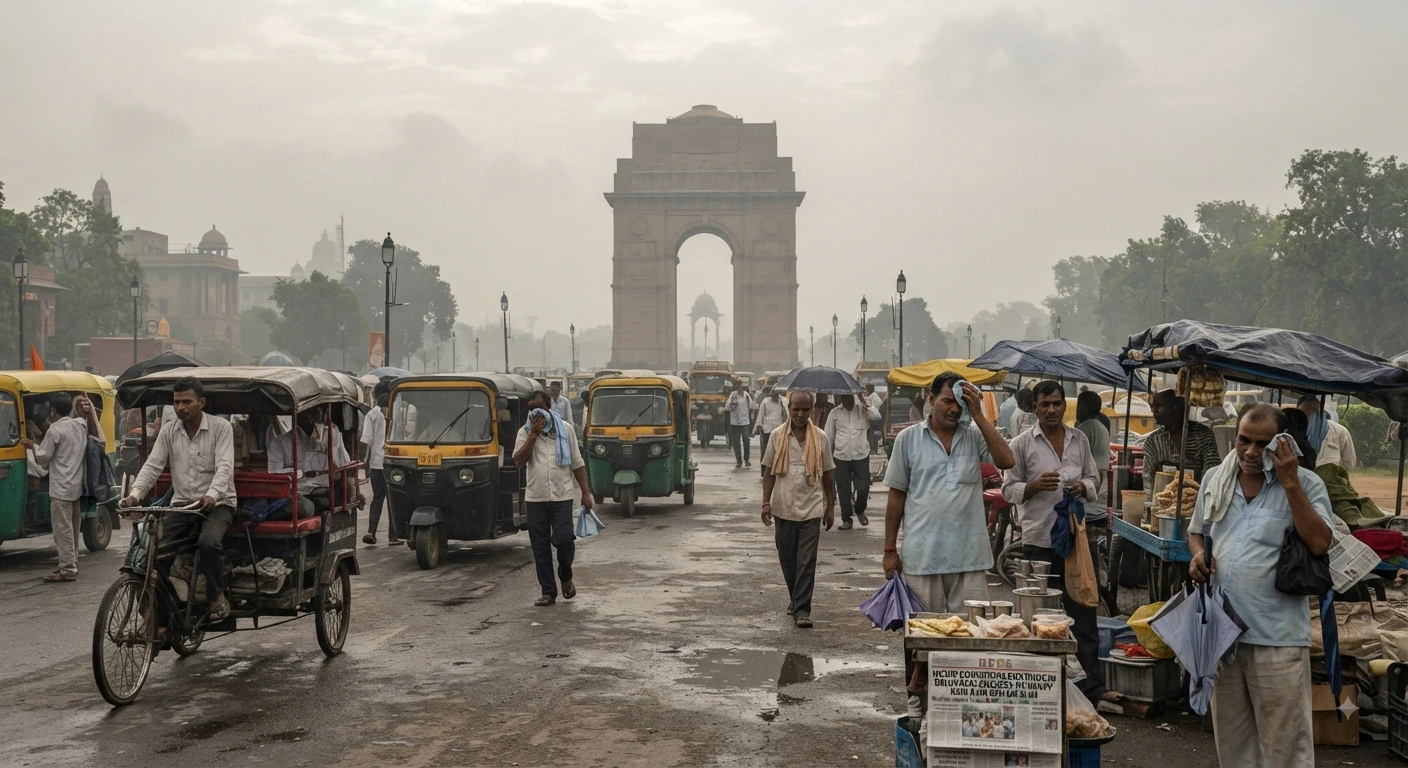
**New Delhi:** Delhi-NCR is currently wrapped in a thick blanket of humidity, with residents feeling the sticky heat even as the monsoon season progresses. According to the latest update from DD India, while the region continues to experience elevated moisture levels in the air, the chances of heavy rainfall remain slim in the immediate future. Meteorologists attribute this to a combination of delayed monsoon advancement, persistent anticyclonic circulation, and a lack of strong western disturbances interacting with the moist air stream. In this in-depth report, we break down the current weather scenario, scientific reasons behind the sustained humidity, and what Delhiites can expect in the coming days.
Introduction: A Humid Hold on the Capital
Delhi-NCR has been experiencing above-average humidity levels for over a week now. The minimum temperatures have remained relatively moderate, but the maximums, combined with high moisture content, are making afternoons particularly uncomfortable. The India Meteorological Department (IMD) has been monitoring the situation closely, and recent satellite imagery shows a fairly stable moisture layer over the Gangetic plains, without the usual convective triggers needed for widespread rainfall. While isolated thunderstorms are not ruled out, the widespread heavy rain that Delhi usually welcomes during peak monsoon has been elusive. This report explores the meteorological factors at play, the impact on daily life, and the outlook for the remainder of the season.
Detailed Body: Understanding the Current Weather Pattern
Why is humidity high but rain scarce?
The primary reason for continued humidity without significant precipitation is the positioning of the monsoon trough. Currently, the trough lies north of its normal position, keeping the core monsoon rainfall focused over central and northern parts of the country, away from the Delhi-NCR region. Additionally, a weak but persistent anticyclone over the western Himalayas is acting as a barrier, steering moisture-laden winds away from the capital. This results in a “dry-humid” condition—high relative humidity (often crossing 70-80% in the mornings and evenings) but limited actual rainfall.
Role of Western Disturbances
Normally, western disturbances during this time of the year help trigger rainfall by interacting with the monsoon currents. However, this season has seen a significant deficit in western disturbance activity over Northwest India. Without these systems, the moist air from the Bay of Bengal gets trapped in the lower troposphere, increasing humidity but failing to generate the uplift needed for rain clouds to form and precipitate.
IMD Data and Trends
According to the latest IMD bulletin, Delhi’s average relative humidity over the past seven days has hovered around 65-72%, which is 8-12% above the seasonal average. The city has recorded only a few isolated showers, none of which have been classified as “moderate” or “heavy” by IMD standards. The monsoon’s advance over Delhi is currently delayed by 7-10 days compared to the long-period average, which directly correlates with the reduced rainfall probability in the short term.
Impact on Daily Life
The sustained humidity is taking a toll on residents. Health experts warn of increased risk of heat-related illnesses, especially for the elderly and children, as the body’s ability to cool itself through sweat evaporation is hindered by high moisture in the air. Outdoor activities, construction work, and sports have been affected, with many reporting a feeling of “heaviness” even at relatively mild temperatures. Moreover, the combination of humidity and rising temperatures has led to a slight uptick in power demand, as air conditioners run longer to maintain comfortable indoor environments.
What the Experts Say
Dr. RK Jenamani, Senior Scientist at IMD, explains: “The current weather configuration is typical of a monsoon break situation. We have moisture, but the dynamical forcing for rain is missing. Delhiites should not expect widespread heavy rain until the monsoon trough shifts southward and a favorable western disturbance approaches the region. Until then, isolated thunderstorms and light showers are the most likely outcome.”
**Key Takeaways: Bullet Points**
– 🔹 Humidity levels in Delhi-NCR are 8-12% above seasonal averages, crossing 70-80% during early morning and evening hours.
– 🔹 Monsoon trough is positioned north of its normal location, diverting rainfall away from the region.
– 🔹 Weak anticyclonic circulation over the western Himalayas is blocking moisture from converting into rain.
– 🔹 Deficit in western disturbance activity over Northwest India is a major factor behind the dry-humid conditions.
– 🔹 IMD reports only isolated, light showers; no heavy rainfall predicted in the next 48-72 hours.
– 🔹 Health advisories issued for heat stress, as high humidity reduces the body’s cooling efficiency.
– 🔹 Power demand spiked by 3-4% due to prolonged AC usage in residential and commercial spaces.
– 🔹 Monsoon advancement over Delhi is currently delayed by nearly a week compared to the long-period average.
– 🔹 Isolated thunderstorms cannot be ruled out, especially during late evening hours, but widespread rain is unlikely soon.
– 🔹 Residents advised to stay hydrated, avoid unnecessary outdoor exertion during peak heat, and monitor local weather updates.
Conclusion: What Lies Ahead for Delhi-NCR
The current humid spell in Delhi-NCR is a classic example of how moisture and rainfall are not always synonymous. While the air remains saturated with water vapor, the atmospheric dynamics required to release that moisture as rain are currently misaligned. The monsoon’s delayed advance, combined with a lack of western disturbances, means that residents should prepare for more days of high humidity and uncomfortable heat, with only sporadic, light showers expected in the immediate future.
As the season progresses, all eyes will be on the monsoon trough’s movement and any revival of western disturbance activity. For now, the advice remains simple: stay cool, stay hydrated, and keep an eye on the sky. The good news is that the monsoon is indeed advancing, just not at the pace or path that would bring immediate, widespread relief to the capital. Patience, along with proper self-care, is the best strategy for navigating these humid days.